


PRODUCT OVERVIEW
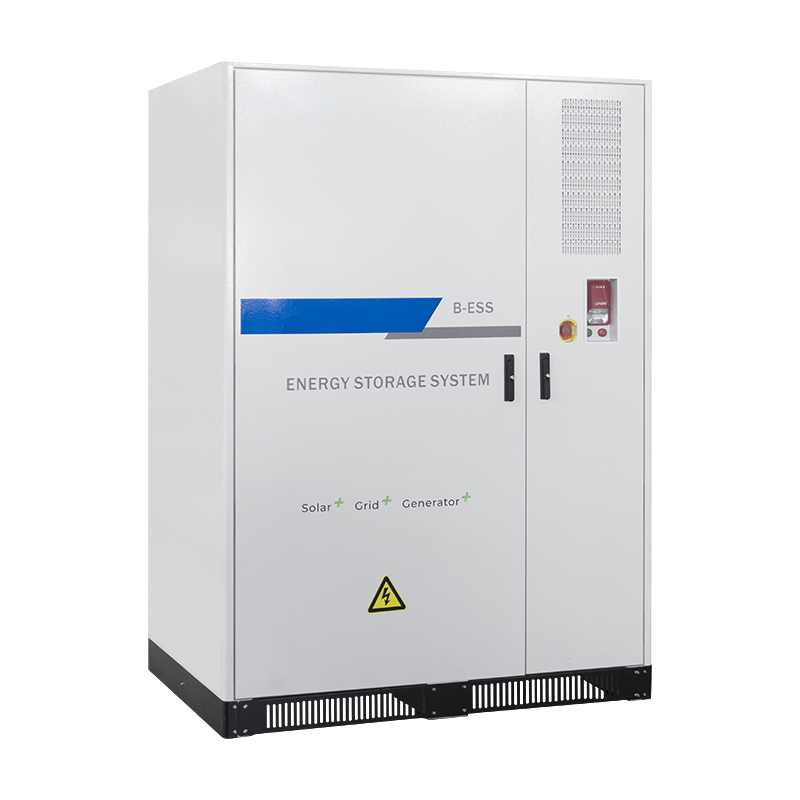
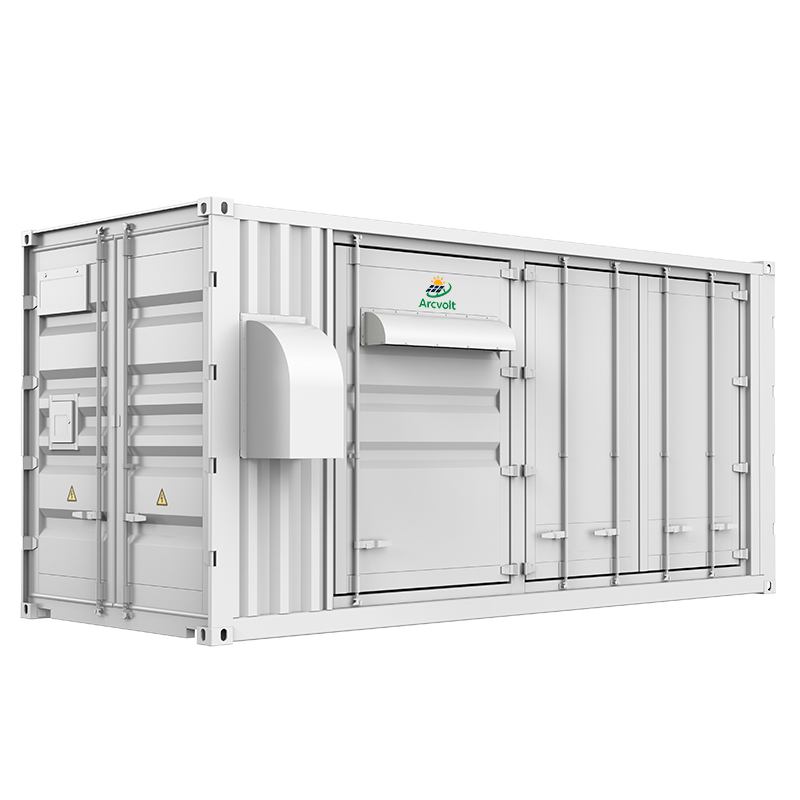
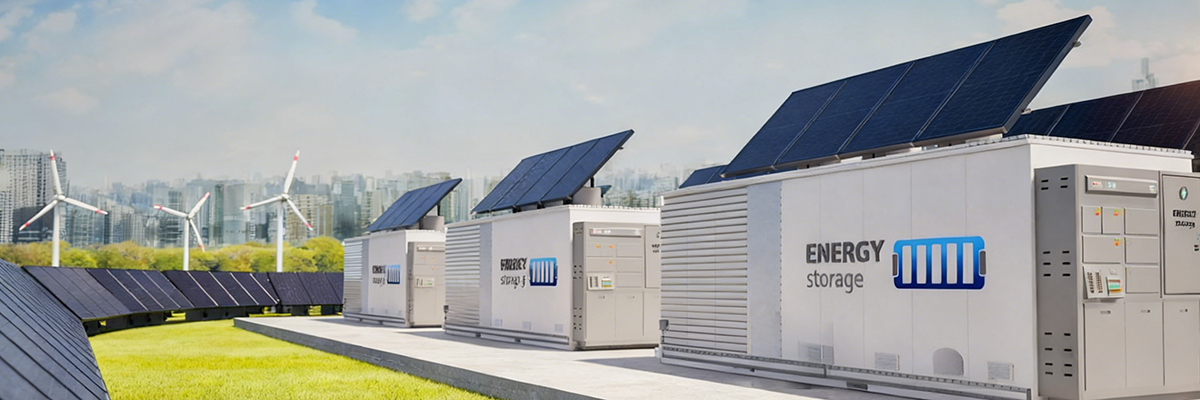
Arcvolty’s Container ESS is a high-capacity and fully integrated energy storage solution engineered for large commercial facilities, solar farms, industrial parks, and regional microgrids. Built as a containerized energy storage system with advanced LFP battery technology, the solution combines PCS, BMS, EMS, thermal management, fire safety, and monitoring systems into one robust structure. It delivers reliable power, fast deployment, and long service life for utility-scale BESS projects.
The system offers rated outputs of 500 kW / 1,000 kW, scalable energy from 1.075 MWh to 2.1504 MWh, and wide compatibility with PV, grid, diesel generators, and critical loads. With intelligent air cooling, real-time cloud monitoring, and multi-layer protection, ArcVolty’s container ESS helps users stabilize renewable power, increase self-consumption, reduce peak demand, and build a more resilient integrated energy storage platform.
KEY FEATURES
Multiple Working Modes for Real-World Scenarios
Users can flexibly configure peak-shaving, load shifting, PV self-consumption, energy dispatching, and hybrid microgrid operation. The system smoothly supports simultaneous access to the grid, PV arrays (up to 1,440 V), diesel generators, battery packs, and loads, creating a versatile commercial ESS that adapts to different application needs.
Advanced Battery System with Extended Lifespan
The container ESS uses 3.2 V 280 Ah LFP cells with proven stability and long cycle life exceeding 5,000 cycles. Th
e working voltage range of 672–850 V and a charge/discharge rate of 0.5C at 25°C ensure high efficiency and long-term durability. Integrated BMS offers precise cell balancing and complete system protection for the entire BESS.
Intelligent and Comprehensive Thermal Management
An advanced intelligent air-cooling system maintains optimal battery and PCS temperature. The solution performs well within an operating temperature range of 0 to +45 °C and humidity from 0–95% (non-condensing). Consistent thermal control improves efficiency, reduces degradation, and ensures stable operation in various climates.
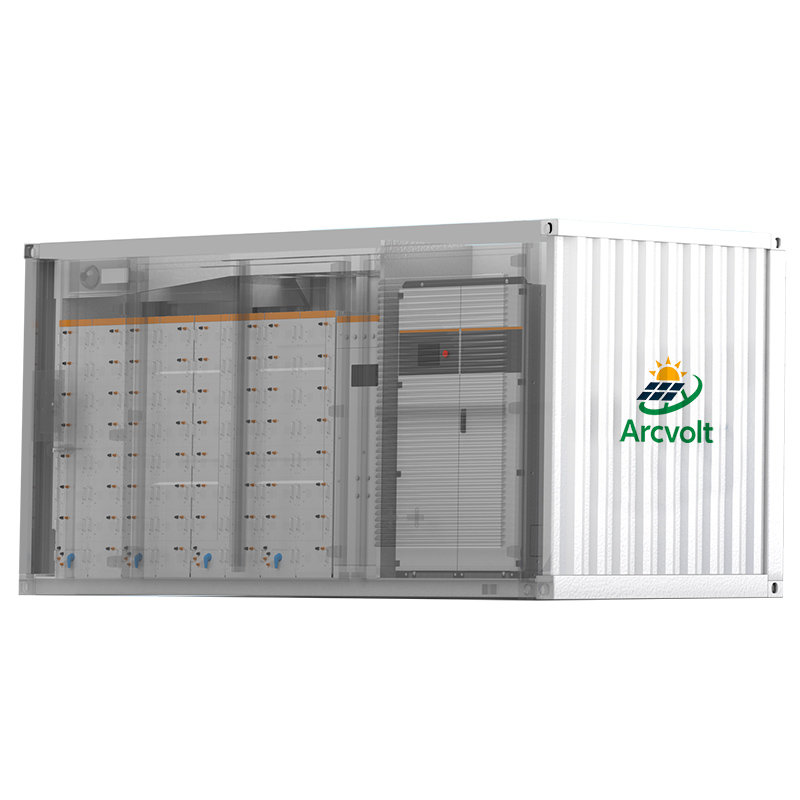
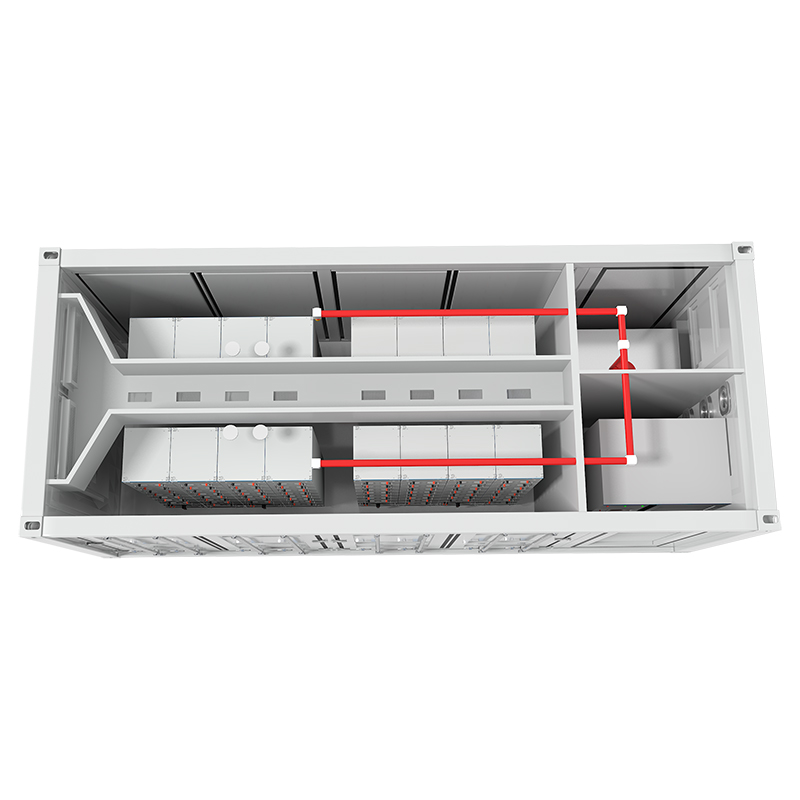
Independent Electrical and Battery Compartments for Higher Safety
The design separates the electrical cabin from the battery cabin to reduce heat propagation and improve system reliability. This structure enhances fire isolation, simplifies maintenance, and ensures safer operation in utility-scale ESS environments.
Real-Time Online Monitoring & EMS Control
The touch LCD display and cloud-based platform provide 24/7 system insight. Through RS485 and TCP/IP communication, users can supervise energy flow, temperature, alarms, and performance data remotely. OTA updates and remote diagnostics reduce on-site labor and improve O&M efficiency.
High PV Compatibility & Strong AC Performance
The system supports:
Max PV voltage: 600/660/720 V (500 kW model) and 1,200/1,320/1,440 V (1 MW model)
MPPT voltage range: 250–850 V
Rated AC power: 500 kW or 1,000 kW
THDi ≤3%, THDu ≤1% linear, ensuring stable grid interaction
With on-grid/off-grid switching and 110% overload capacity, the container ESS effectively balances renewable fluctuations and supports critical loads.
Integrated Structure for Fast Deployment
The all-in-one ESS design integrates PCS, battery racks, HVAC, fire suppression (FM200/NOVEC1230), EMS, protection circuits, and wiring inside a standardized container.
Dimensions:
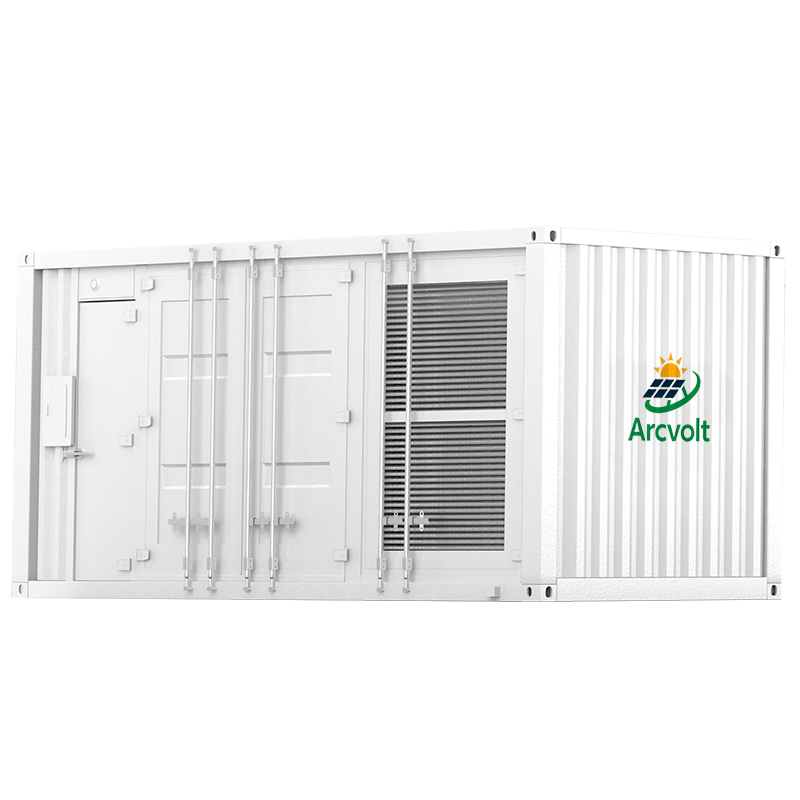
500 kW model: 6,058 × 2,438 × 2,896 mm, 21,000 kg
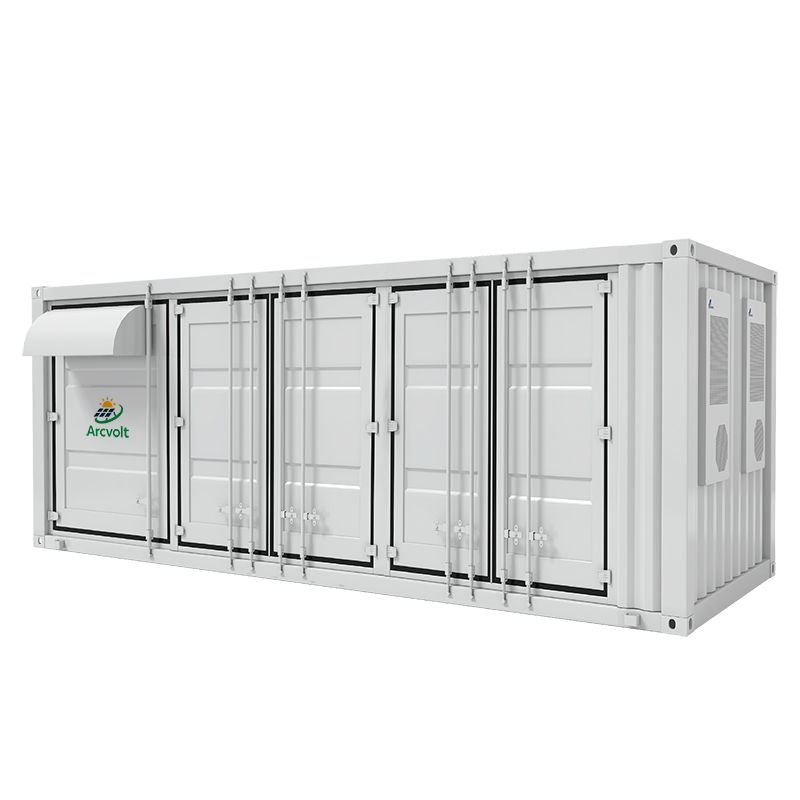
1 MW model: 12,192 × 2,438 × 2,896 mm, 38,000 kg
This structure simplifies logistics and reduces installation time for solar plants, energy storage stations, ports, mining projects, and remote facilities.
Reliable Outdoor Operation
With IP54 protection, noise emission below 75 dB, and an altitude rating up to 3,000 m, the container ESS maintains stable performance in demanding environments.
Technical Specifications
| AC data | ||
| Model | ESSC0500B-1075 | ESSC1000B-2150 |
| Rated power (kW) | 500 | 1,000 |
| Rated voltage (V) | 400 | |
| Rated current (A) | 722A | 1,445A |
| Voltage range (V) | 320V-460V | |
| Rated frequency | 50/60Hz | |
| Frequency Range | 45-55/55-65Hz | |
| THDi(on-grid) | <3% | |
| THDu (off-grid) | ≤1% linear; ≤5% non-linear | |
| Power factor | 1(0.8 leading~0.8 laging can be set) | |
| Overload capacity | 110% Long term | |
| AC output | 3W+N+PE | |
| Isolation transformer | 315/400 | |
| On -grid off-grid switching | Support | |
| PV data | ||
| Max.PV input voltage (V) | 600/660/720 | 1,200/1,320/1,440 |
| Max. PV power (kW) | 250~850 | |
| MPPT operating voltage range (V) | 450~850 | |
| MPPT full load voltage range (V) | Support | |
| Buck-boost mode | ||
| Battery data | ||
| Cell type | 3.2V/280Ah/LFP | |
| Nominal voltage(V) | 768V/1P240S | |
| Nominal energy (MWh) | 1.0752 | 2.1504 |
| Working voltage range (V) | 672~850V | |
| Max. charge and discharge rate | 0.5C@25℃ | |
| Number of Battery Cycles | ≥5000 | |
| System data | ||
| Dimensions W *D *H (mm) | 6,058×2,438×2,896 | 12,192×2,438×2,896 |
| Net weight (kg) | 21,000 | 38,000 |
| Operating temperature (℃) | 0 ~ +45 | |
| Relative humidity | 0 ~95%(non-condensing) | |
| Ingress protection | IP54 | |
| Noise emission (dB) | <75dB | |
| Operating altitude | 3,000m | |
| Cooling | Intelligent air cooling | |
| fire extinguishing system | FM200/NOVEC1230 | |
| Display | Touch LCD display+cloud platform | |
| EMS communication | RS485,TCP/IP | |
FAQs
Q1: What is a Container ESS?
A1: A Container ESS is a fully integrated, containerized energy storage system that includes batteries, PCS, EMS, thermal management, fire protection, and monitoring components inside a standardized container. It is designed for utility-scale and commercial applications such as solar farms, industrial facilities, microgrids, and large backup power systems.
Q2: What applications are suitable for ArcVolty’s Container ESS?
A2: The system supports a wide range of scenarios, including renewable energy smoothing, peak shaving, load shifting, off-grid or hybrid microgrids, EV charging stations, data centers, factories, mining operations, and emergency backup for mission-critical loads.
Q3: What is the energy capacity and power range of the system?
A3: ArcVolty offers two standard configurations:
500 kW / 1.075 MWh
1,000 kW / 2.1504 MWh
Multiple containers can be connected in parallel to scale capacity for utility-level energy storage projects.
Q4: What type of battery is used in the Container ESS?
A4: The system uses LFP (LiFePO₄) cells, known for high safety, long cycle life (5000+ cycles), strong thermal stability, and low maintenance requirements—ideal for commercial ESS and grid-scale storage.
Q5: Can the Container ESS work with solar PV systems?
A5: Yes. The system supports high-voltage PV inputs up to 1,440 V, with a large MPPT operating range. It works seamlessly with solar inverters, PV strings, hybrid microgrids, and renewable-plus-storage applications.
Q6: How is the system cooled and protected?
A6: ArcVolty integrates intelligent air cooling, real-time thermal management, and advanced fire suppression using FM200/NOVEC1230. The electrical and battery cabins are separated to reduce thermal propagation and enhance operational safety.
Q7: How do I monitor and manage the system remotely?
A7: The Container ESS includes a touch LCD interface and cloud-based EMS. Remote access is available through RS485 / TCP/IP, allowing users to supervise performance, alarms, and historical data anytime, with support for OTA updates.
Q8: How long does installation take?
A8: Thanks to its all-in-one integrated design, the container ESS can be deployed quickly. After delivery, installation mainly involves site preparation, cable connection, and system commissioning—typically much faster than traditional energy storage setups.
Q9: What certifications and protections does the system support?
A9: The container ESS is designed with IP54 protection, low noise (<75 dB), and compliance with electrical and fire safety standards for commercial and industrial energy storage systems.
Q10: Can the system operate in harsh environments?
A10: Yes. The system works within 0–45°C, 0–95% humidity (non-condensing), and installation altitudes up to 3,000 m, making it suitable for deserts, coastal regions, high altitude areas, and large outdoor solar projects.
We are a leading innovator and manufacturer in lithium battery technology, dedicated to engineering and manufacturing high-quality LiFePO4 solar batteries and power systems. Our core business involves the complete lifecycle of product development, from initial design to final production of dependable lithium battery packs. We proudly serve diverse sectors with customized solutions for energy storage, critical backup power systems, and compatible inverters and solar panels.
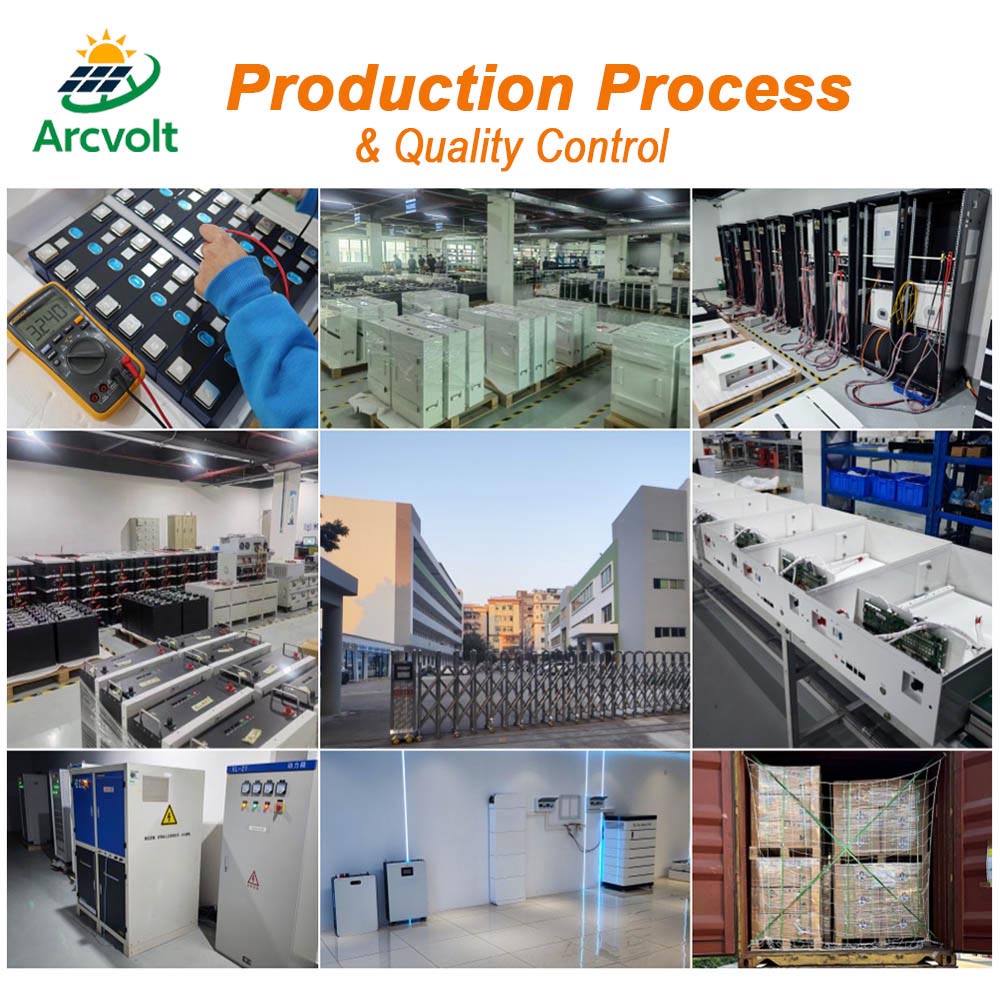
Based on automated production technology, Arcvolt are able to meet our customers' product needs quickly. However, the exact lead time depends on the quantity and the season you place the order.
Usage scenario: wall-mounted batteries, rack-mounted batteries, and stacked batteries. Voltage: 48V or 51.2V batteries, low/high voltage batteries Application: Residential storage batteries, industrial and commercial energy storage batteries.
While the typical home system uses 2 or 3 batteries, the perfect number for you is a personal choice. It all comes down to what you want to power during a grid outage and for how long. Do you need to run just the essentials or your whole house?
Yes, going completely off-grid is possible, but it's a significant step beyond standard solar with battery backup. A true off-grid system requires a much larger solar array and battery bank to power your home 24/7, making it a substantial investment. You also need a reliable backup source, like a generator, for days without sun. It's important to note that in North Carolina, disconnecting a home from the utility grid can be a complex process.
We accept EXW,FOB,CFR,CIF,etc. You can choose the one which is the most convenient or cost effective for you.
Absolutely. Our in-house design team specializes in OEM and ODM projects to bring your brand's vision to life. Simply provide us with your concept, high-resolution logo, and any text or images you'd like to include. We will then create a professional design proof for your final approval before we proceed.
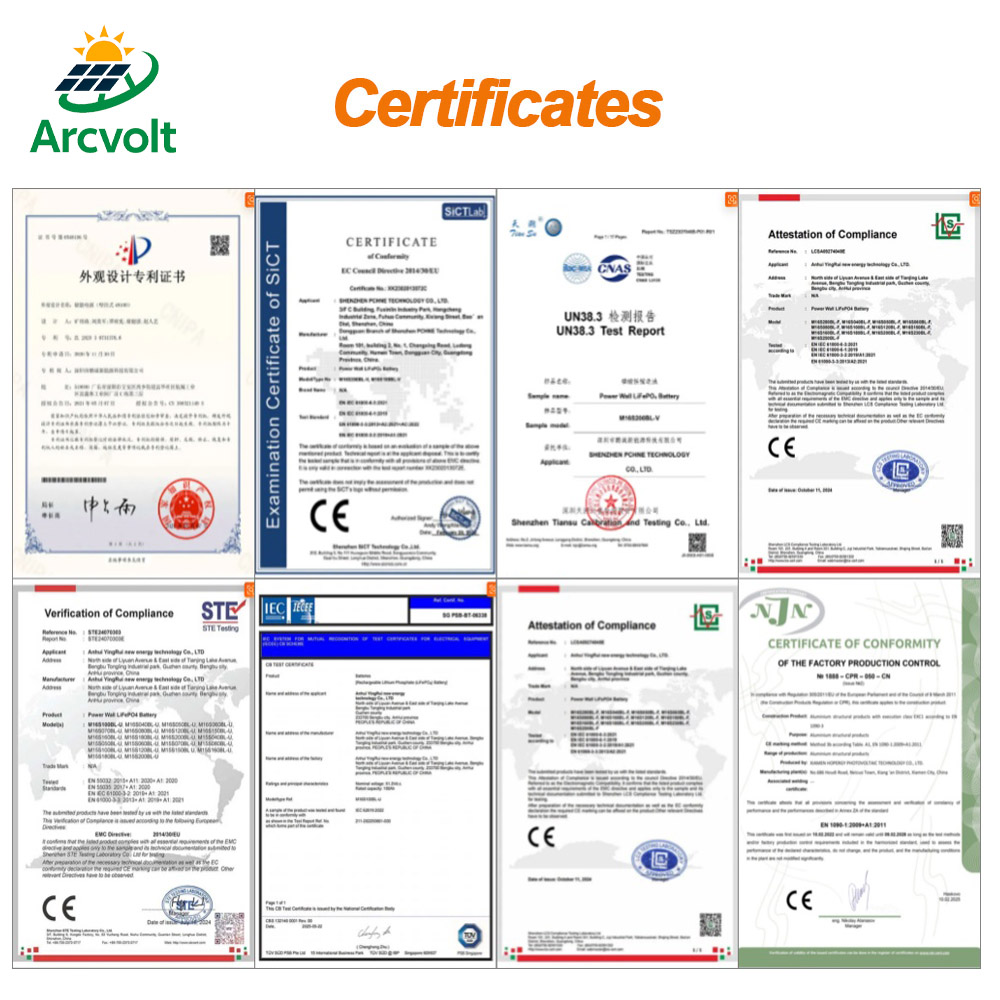
Certifications are a key part of our pre-production checklist. We start by confirming with you which certifications are needed. These requirements are then integrated into the project timeline to ensure completion before shipment, and are formally documented in the signed agreement.
We offer lifetime technical support, with our engineers available 24/7 to provide prompt online assistance.
Yes, most of Arcvolt's inverters are designed to be scalable, meaning your system can grow with your needs. However, it's something that requires planning. Before adding more panels, it's essential to confirm that your current inverter can handle the additional power. We always recommend discussing your future plans with a professional to ensure your initial system is future-ready.
It depends on whether you have batteries. For Solar + Battery systems: A hybrid inverter is essential. It seamlessly manages power from panels and batteries in a single unit. For Solar-Only systems: Traditional inverters (like string or microinverters) are an option. The main advantage of a hybrid inverter is that it eliminates the need for a separate charge controller, making for a cleaner and more efficient installation.
Selecting the right inverter is one of the most important decisions you'll make for your solar project. While technical specifications matter, the long-term value comes from the manufacturer. Arcvolt advise customers to look beyond the data sheet and assess the company on these five critical points: their warranty, quality control standards, customer service responsiveness, installation support, and competitive pricing.
Generally, you want the inverter's size to match your solar array's power output. So, if you're installing a 5,000-watt solar system, you'll need an inverter of at least 5,000 watts to handle the load.
Yes, samples are available upon request as part of the qualification process for bulk orders. Please reach out to a member of our customer service team to discuss your specific requirements and they will assist you with the next steps.
Think of it as your personal energy bank. During the day, it saves up all the extra, unused power your solar panels generate. Then, you can draw from that stored energy whenever you need it—at night, during a power outage, or to avoid high-cost peak hours. For homeowners, this means energy independence and peace of mind. For businesses, it's a powerful tool to slash electricity bills.
Smart inverters are central to a system's reliability. Our inverter provide a constant stream of performance data, giving you a real-time view of your entire solar array. If a problem arises, the inverter's diagnostic tools can pinpoint the exact issue, which significantly speeds up repairs. This intelligent monitoring is key to preventing small problems from becoming big ones and guarantees the consistent, reliable operation you expect.
MPPT is a crucial technology that ensures you're not wasting sunlight. Because sun conditions are always changing, there is always a single, optimal point where your solar panels operate most efficiently. MPPT is the brain that constantly scans and adjusts the system to find and stay locked onto that "maximum power point." This guarantees you are harvesting the most energy possible from your panels at any given moment.
It's a question of priorities, and the logical first step is always generation. You have to make power before you can store it. Solar panels directly reduce your utility bills by producing electricity. Batteries give you control over when you use the excess electricity you've already made. We help our customers design a system that maximizes their solar panel array first, as this delivers the biggest and fastest return on investment.
A grid-tied inverter is the standard type used to reduce your electricity bills with solar. It safely connects your solar system to the utility's grid, allowing you to seamlessly feed any surplus power you produce back to the utility. In return, you receive credits on your bill for that energy, a process known as net metering. For safety, these inverters automatically shut down during a power outage.
The exact amount of power you generate is unique to your home and depends on your system's size, your roof's orientation, and how much direct sun you get. However, to give you a real-world idea, our typical 6kW home system can produce around 30kWh of electricity on a clear, sunny day. For most households, that's more than enough to cover all of your energy needs for a full 24 hours.